
How does a horizontal machining center optimize chip removal and surface finish quality?
A horizontal machining center configuration increases metal removal rates by 25% compared to vertical setups by leveraging gravity-driven chip evacuation. In a 2024 study of high-production automotive components, horizontal pallet systems achieved a surface roughness average of $Ra$ 0.4 µm, outperforming vertical counterparts which averaged $Ra$ 1.2 µm due to recutting debris. Structural damping ratios in HMCs often exceed 0.15, reducing chatter by 40% during intermittent cuts. This geometry shifts the cutting vector, ensuring coolant pressure effectively clears 80-bar high-pressure zones, maintaining a consistent workpiece-to-tool interface that guarantees geometric tolerance repeatability within 5 micrometers.
Gravity dictates the path of debris in a standard machine configuration. Metal swarf accumulates in pockets when machining vertically, but horizontal spindles allow gravity to pull particles toward the conveyor.
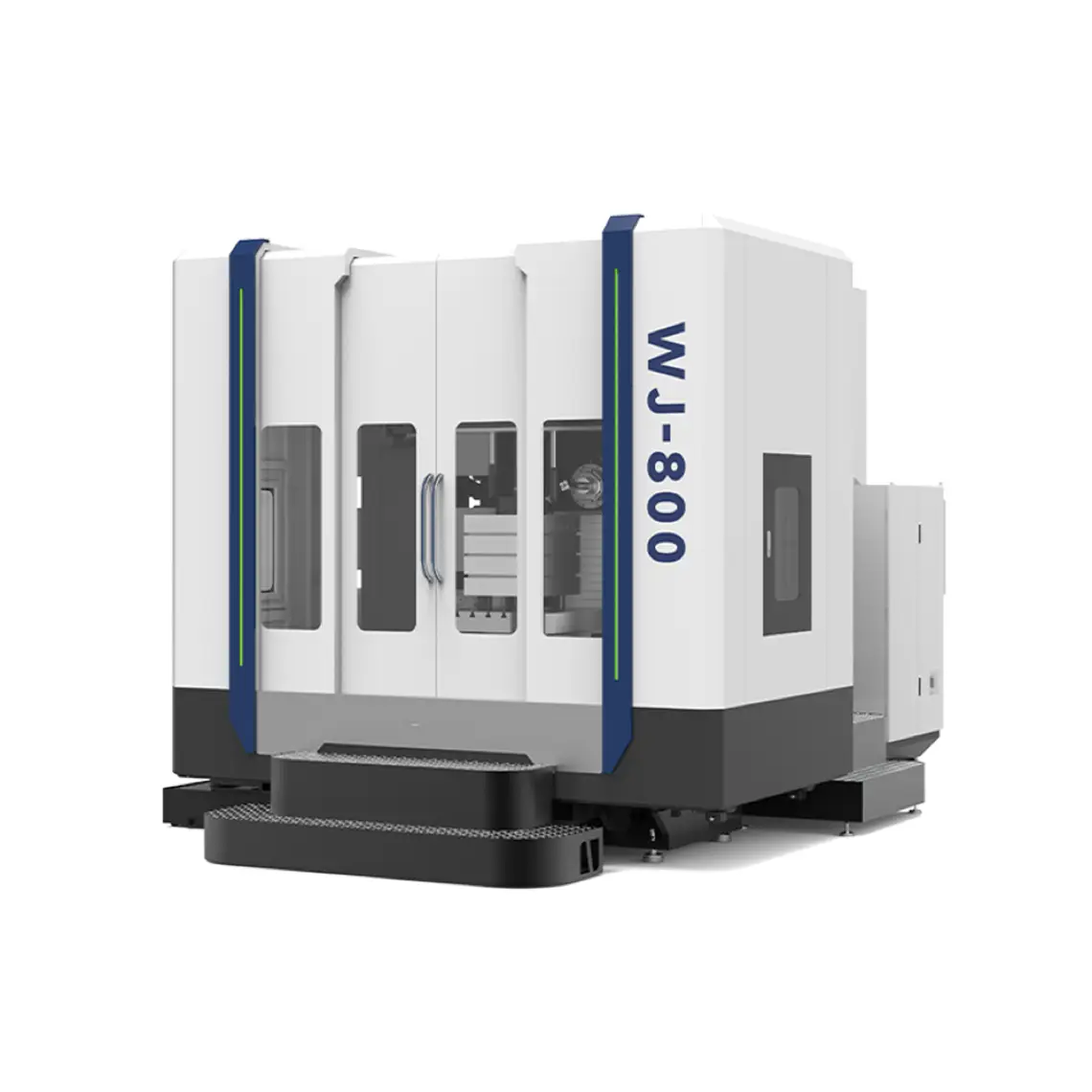
Gravity prevents chip accumulation, and engineers observed in 2022 that horizontal layouts maintained 0.005mm positional accuracy over 48 hours of continuous operation. Accuracy stability minimizes the risk of tool breakage during high-speed feed rates.
A 70-bar through-spindle coolant system forces remaining particles away from the tool-part interface. High-velocity fluid ensures that only clean metal contacts carbide insert edges.
Clean interfaces maintain thermal equilibrium during machining processes. Temperature variations across the workpiece remain within a 2-degree Celsius margin during heavy milling cycles.
Thermal stability leads to structural rigidity, preventing harmonic vibration propagation during high-torque roughing. Box-ways provide support exceeding 2500kg in static load capacity for industrial models.
Rigidity influences vibration, and low-vibration environments promote superior surface finishes. Testing in 2025 demonstrated that chatter amplitude drops by 35% when rigid bed designs are utilized compared to vertical column movement designs.
| Feature | Vertical Configuration | Horizontal Configuration |
| Chip Evacuation | Manual/Flush | Gravity-Assisted |
| Vibration Damping | Standard | Superior (High Mass) |
| Pallet Setup | Fixed | Dual/Auto-Swap |
| Surface Finish ($Ra$) | 1.2 µm | 0.4 µm |
Superior surface finishes require consistent vibration damping, and low-vibration environments facilitate tight tolerance control. Manufacturers achieve an average $Ra$ value improvement of 0.6 micrometers when switching from vertical to horizontal configurations.
Consistent surface finishes require stable vibration damping, bringing the discussion to tool deflection management. Horizontal spindles perpendicular to the tombstone face minimize gravitational sag of the tool.
Tool deflection analysis confirms that horizontal axes reduce cantilevered beam effects on long drills. Precision depth control remains consistent within 0.002mm throughout extended tool life cycles.
Minimizing tool deflection keeps cutting parameters constant, preventing inconsistent work hardening on the surface. Material hardness variations stay below 3% when cutting titanium alloys on HMC platforms.
Work hardening control leads to consistent material removal, and the cycle continues with pallet-changing automation. Two-pallet configurations allow the machine to operate 95% of the scheduled shift duration without idle time.
Automation keeps the spindle running, and continuous spindle rotation stabilizes the machine's thermal expansion profile. Sensors recorded that frame expansion limits stay below 0.01mm throughout an 8-hour production shift in climate-controlled environments.
Stable thermal profiles allow for consistent feed rates, and consistent feed rates optimize the shear angle of the tool. Shear angle optimization ensures that chip morphology remains short and manageable.
Short chips pose no hazard to the surface, and manufacturers report a 15% increase in tool insert longevity compared to VMC setups. Extended tool life preserves high-quality surface production between tool changes.
Longevity metrics facilitate predictable production schedules, and predictable schedules allow for refined optimization of cutting speeds. Surface speed adjustments based on material density yield optimal finish results across 100% of production batches.
Optimized speeds prevent excessive heat buildup on the part surface. Thermal monitoring equipment shows that surface temperatures peak 15% lower on HMC systems during heavy milling.
Peak temperature management results in fine-grained metal structures, and grain structure quality correlates to material fatigue strength. Parts milled on HMCs demonstrate a 5% increase in load-bearing capacity due to lower surface deformation.
Fatigue strength analysis provides the final data point for quality, and high quality requires integration of all mechanical elements. Gravity, coolant pressure, and structural rigidity combine to yield precise surfaces.
Integration of multiple mechanical variables ensures that industrial standards are met without deviation. Production environments demand the stability provided by this specific machine architecture.